
Earlier this year, when The Washington Post reached out for my input on how to treat online product recommendation lists published by big media, I had a lot to say. My thoughts ultimately appeared in the article boiled down to this:
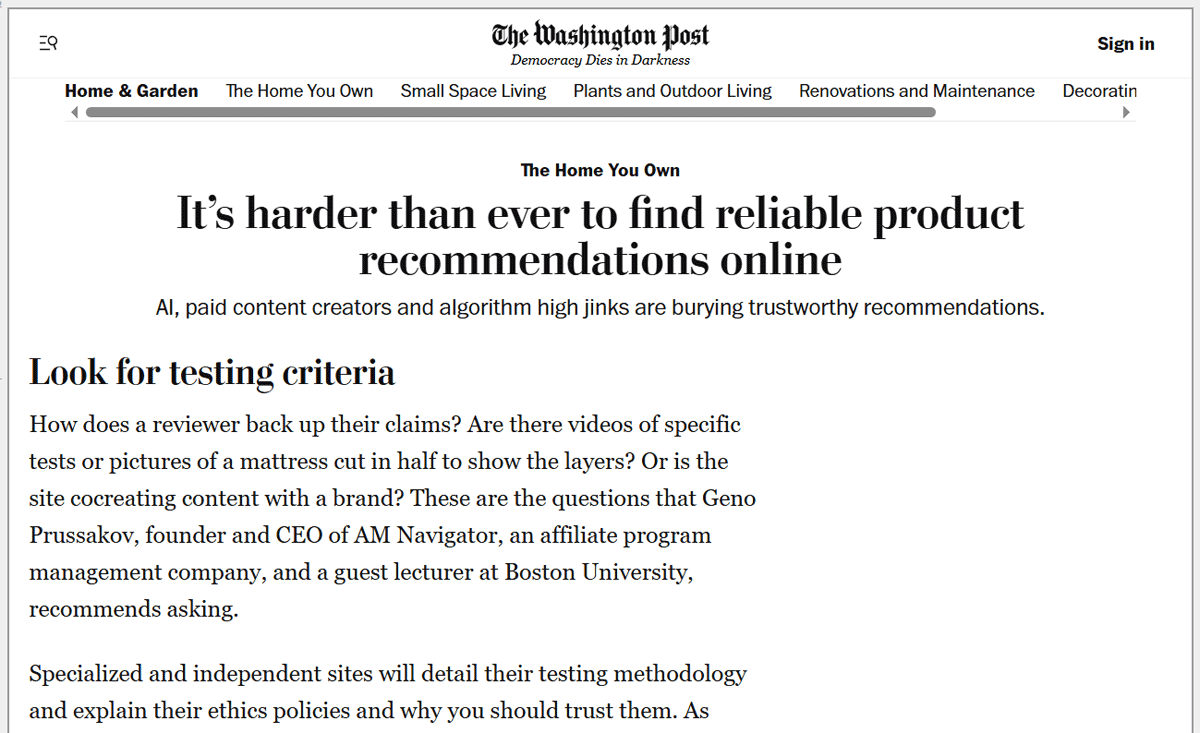
However, in this blog post, I would like to give a more thorough answer on the topic.
For quite a few years already, numerous big media players have been turning their authority into a monetizable thing. Examples of this may be found all around, but here are just a few illustrative ones:
- Forbes has a Forbes Vetted section where they post product reviews, publish “best of” listicles, give out product awards, and more
- Hearst has an extensive Good Housekeeping section dedicated to reviews of home and outdoors products
- CNET runs CNET Shopping publishing reviews, fetching coupons and best product prices, and also offering their own browser extension
- Business Insider publishes BI Guides — reviews and listicles of products and services in various industries
- The Wall Street Journal runs WSJ Buy Side where, again, readers can get “expert shopping advice and reviews”
- …and then The New York Times has owned The Wirecutter, heavily monetized through affiliate marketing relationships, for nearly a decade already
Most of the above being examples of monetizing search engine authority, the inevitable question then is: How can one trust the reviews and product recommendations found online, even when, or especially if, they are published by big media?
Let’s start with understanding something about big media and content monetization. We at AM Navigator have been working with big media publishers as affiliate partners for the merchants whose affiliate programs we manage, and I can say from experience that most treat this monetization business very seriously. Before turning their brand into an endorsement mechanism, most big media really do their homework. Here are four ways they do it:
- Many don’t and won’t “review” or recommend unless they believe that the product or service is decent. This is often true of smaller publishers as well. Very few will want to publish a mostly negative review.
- Every publisher must disclose the material connection, if one exists between them and the seller of product. The Federal Trade Commission defines this relationship as a sponsor-endorser one. For details, see The Performance Marketing Association’s section on FTC Regulations, Guidelines and Resources.
- A number of big media players run their own product testing labs. A good example to check out is the Good Housekeeping Institute Beauty Lab.
- Finally, many practice a customer-helpful-content-first approach, maintaining a separation between their editorial and monetization teams. The Wirecutter, which is known for this, won’t insert new products/merchants into already-published content, but aims to monetize content without altering it.
Despite all of the above, we all know that, at times, a product’s ranking ends up being influenced by a financial arrangement with the advertiser (placement fees, inflated affiliate commission rates, EPC guarantees, or a combination of these).
So, here are four things you can do as a consumer to be better equipped in your buying decision:
- Compare what you see in a stand-alone product review to real buyers’ reviews (on Amazon, Tripadvisor, etc)
- Scrutinize how the reviewer backs up their claims and conclusions. Are there videos of specific tests presented? Is any independent research referenced?
- See if any real “cons” are listed in the review. Those other than the “I wish I learned about it earlier” fluff.
- And, finally, remember: reviewers, no matter who they write for, are people too. They have their own criteria, preferences, and expectations. Buyers should read more than one recommendation, keeping their own needs and wants in consideration. What seems affordable and great value for one may not work for someone else.
What would you add to the above? The “Comments” area below is all yours, and I promise: no comment will be left unanswered. So: ready, set, go…